1793 and the following years
Séchard Takes the Printing House
During the Revolution, [Jérôme-Nicolas Séchard](entity:character-recall-character-j-r-me-nicolas-s-ch-cb59a96e0196) survives the military requisitions that remove most printers from [Angoulême](entity:location-recall-location-angoul-me-c838a9088814). Though he cannot read or write, he becomes master of the printing house through a succession of educated assistants and learns to turn his lack of skill into a shrewd commercial advantage.
His thrift hardens into avarice as he acquires property and treats workers as instruments. The old presses and the habits of the shop become, for him, both cherished possessions and leverage over his future son.
Before 1819
David Trains at Didot
[David Séchard](entity:character-recall-character-david-s-chard-907bd847d277) excels at school, then travels to [Paris](entity:location-recall-location-paris-c02b439ce220) to study advanced typography at the Didot establishment. Unlike his father, he becomes both an educated printer and a serious thinker, returning to [Angoulême](entity:location-recall-location-angoul-me-c838a9088814) in 1819 with little money but formidable knowledge.
Jérôme-Nicolas expects his son to take over the business, yet sees David’s education chiefly as a way to secure a more profitable successor. Their different ideas of work and value prepare the ground for a bitter family bargain.
Late 1819
The Father’s Inflated Sale
When David returns, Jérôme-Nicolas presents an inventory that values obsolete presses and worn type at an extravagant sum. He persuades David to accept a partnership structured so that the father can collect the price while contributing no working capital.
David, trusting his father and disliking money quarrels, accepts. The sale turns their relationship into a debt: Jérôme-Nicolas treats his son as a buyer to be defeated rather than a child to be helped.
Around 1819–1820
The Cointets Take the Advantage
The Cointet brothers acquire the second printing privilege in [Angoulême](entity:location-recall-location-angoul-me-c838a9088814) and build a stronger business by courting the clergy and local authorities. David, absorbed by science and indifferent to political loyalties, fails to defend his clientele against their tactics.
They take the lucrative church work and the official printing contracts, then buy the Séchard newspaper. The sale brings money to Jérôme-Nicolas but leaves David with a weakened, dependent shop and a noncompete obligation.
Before 1821
Lucien’s Family Falls into Poverty
[Lucien de Rubempré](entity:character-recall-character-lucien-de-rubempr-6f15b78d5bea) is born Lucien Chardon, the son of a former army surgeon and a descendant of the noble Rubempré family through his mother. After his father dies, [Madame Chardon](entity:character-recall-character-madame-chardon-efbeac636558) and [Ève Séchard](entity:character-recall-character-ve-s-chard-4d3be1e650e4) support the household through difficult work while directing nearly all their hopes toward Lucien.
Lucien’s beauty and literary ambition seem to promise a future above their station. His family’s sacrifices, however, make his ambitions possible while leaving them dangerously dependent on his success.
Around 1820
The Friends Imagine a Fortune
Reunited as former schoolmates, [David Séchard](entity:character-recall-character-david-s-chard-907bd847d277) and [Lucien de Rubempré](entity:character-recall-character-lucien-de-rubempr-6f15b78d5bea) become intimate friends, each recognizing in the other a rare intelligence. David supports Lucien with a monthly allowance and work in the printing house, although he has little practical need for another assistant.
Remembering [Monsieur Chardon](entity:character-recall-character-monsieur-chardon-3b678cbcc452)’s ideas about cheap sugar and paper, David sees a path to wealth in a new papermaking process. The two men begin to imagine that their different talents may rescue them from provincial obscurity.
Early 1821
David Falls in Love with Ève
[David Séchard](entity:character-recall-character-david-s-chard-907bd847d277) becomes quietly devoted to [Ève Séchard](entity:character-recall-character-ve-s-chard-4d3be1e650e4), whose gentleness and practical intelligence distinguish her from the world of ambition around her brother. He is too shy to declare his feelings and often visits the Chardon household only to turn away at the door.
Ève, who has already understood his affection, is drawn to his reverence for Lucien and to the strength hidden beneath his reserve. Their tender attachment develops alongside David’s friendship with Lucien.
Early 1821
Lucien Is Presented to Louise
[Sixte du Châtelet](entity:character-recall-character-sixte-du-ch-telet-d46512b0abe5) introduces [Lucien de Rubempré](entity:character-recall-character-lucien-de-rubempr-6f15b78d5bea) to [Louise de Bargeton](entity:character-recall-character-louise-de-bargeton-c487260de7e9), the intellectual and socially ambitious mistress of an exclusive [Angoulême](entity:location-recall-location-angoul-me-c838a9088814) salon. The meeting seems to Lucien like admission into a world that has always been closed to his family.
Louise is captivated by his beauty and poetic promise. For Lucien, her attention combines the hope of love with the prospect of social advancement, though he does not yet understand the rules governing either.
Spring 1821
The Affair Takes Shape
Lucien becomes a regular visitor to [Louise de Bargeton](entity:character-recall-character-louise-de-bargeton-c487260de7e9), who encourages his poetry, teaches him languages and manners, and increasingly treats him as her beloved protégé. Their private intimacy grows beneath the watchful eyes of [Angoulême](entity:location-recall-location-angoul-me-c838a9088814) society.
Louise gives him a new name, [Lucien de Rubempré](entity:character-recall-character-lucien-de-rubempr-6f15b78d5bea), and urges him to pursue royal favor and aristocratic recognition. Her influence awakens his appetite for rank and luxury, while his family’s sacrifices begin to seem secondary to his imagined future.
Spring 1821
Lucien Enters the Salon
When Louise publicly admits Lucien into her salon, the aristocracy treats the son of an apothecary as an unwelcome social experiment. Louise defends her choice, insisting that genius need not be born noble, and Lucien is introduced under his mother’s aristocratic name.
The reception gives Lucien a taste of recognition but also teaches him how readily polite attention can mask contempt. He is praised as a rising poet while his origins remain a weapon in the hands of his hosts.
Spring 1821
The Poetry Reading Turns Hostile
At a major evening gathering, Lucien reads poems by André Chénier before an audience that barely understands or cares for poetry. The listeners whisper, make jokes, and grow impatient; the humiliation becomes acute when the bishop’s apparent praise is turned into an insult about Lucien’s mother.
Louise attempts to shield him, but the salon’s contempt wounds his pride and sharpens his desire to conquer the society that has dismissed him. The experience becomes an early lesson in the distance between artistic merit and social approval.
Spring 1821
David Refuses the Salon
Lucien offers [David Séchard](entity:character-recall-character-david-s-chard-907bd847d277) a chance to enter Louise’s aristocratic circle, but David refuses. He believes that his position as a provincial printer would expose him to ridicule and that Lucien’s future may be better served if he goes alone.
David’s refusal is generous, but it also reveals the different paths opening before the friends: David chooses work, family, and scientific study, while Lucien is drawn toward visibility and social advancement.
Spring 1821
David and Ève Become Engaged
During a quiet walk beside the [Charente River](entity:location-recall-location-c4e5c2ea2b07), [David Séchard](entity:character-recall-character-david-s-chard-907bd847d277) tells [Ève Séchard](entity:character-recall-character-ve-s-chard-4d3be1e650e4) that he wants to marry her and help support her mother and Lucien. Ève admits that she has loved him in secret and accepts.
Their happiness rests on practical sacrifice as much as romance. David imagines an independent home for the family and hopes his future invention will secure it, while Ève agrees to share the risks of his work.
Spring 1821
Séchard Rejects the Marriage
David visits his father at [Marsac](entity:location-recall-location-marsac-3b4e3a7356d1) to ask for consent to the marriage and help with housing. [Jérôme-Nicolas Séchard](entity:character-recall-character-j-r-me-nicolas-s-ch-cb59a96e0196) approves the match only in name, refuses financial assistance, and complains that Ève brings no dowry.
David returns knowing that he cannot count on his father’s support. The encounter confirms that Jérôme-Nicolas’s avarice governs even his closest family relationships.
September 1821
Lucien Chooses Paris
After a duel between [Monsieur de Bargeton](entity:character-recall-character-monsieur-de-bargeto-d1af7b2a7c88) and Stanislas de Chandour, Louise decides to leave [Angoulême](entity:location-recall-location-angoul-me-c838a9088814) for [Paris](entity:location-recall-location-paris-c02b439ce220). She invites Lucien to accompany her, promising that her family connections will open doors to literary and political success.
Lucien remembers that Ève and David are to marry within days, but Louise’s anger and promises overwhelm his hesitation. He chooses the journey, abandoning his family at a moment when they have spent their savings to build a home for him.
September 1821
Louise Separates from Lucien in Paris
Lucien and Louise arrive in [Paris](entity:location-recall-location-paris-c02b439ce220) together, but [Sixte du Châtelet](entity:character-recall-character-sixte-du-ch-telet-d46512b0abe5) warns her that society will reject her if she appears to have eloped with a young man of uncertain standing. Louise moves to a separate apartment and insists that Lucien remain at a modest hotel.
The separation exposes their unequal expectations. Louise safeguards her reputation and prospects, while Lucien understands the move as the first sign that she may abandon him.
September 1821
Paris Teaches Lucien Its Codes
Lucien discovers that his provincial clothes, manners, and ignorance of Parisian customs mark him as an outsider. He spends heavily on fashionable clothes, hoping to be received by [Madame d'Espard](entity:character-recall-character-madame-d-espard-4fad3a38051e), but his new appearance cannot erase his lack of connections or social ease.
At the Opéra, the marquise learns that Lucien’s father was an apothecary and withdraws her welcome. Louise follows her cousin, leaving Lucien alone in the theater and beginning his first sharp experience of Parisian rejection.
September 1821
Louise Renounces Lucien
After Lucien is excluded from [Madame d'Espard](entity:character-recall-character-madame-d-espard-4fad3a38051e)’s circle, Louise does not defend him. He returns her letters and writes bitterly of her abandonment, while she turns toward the Parisian world that can advance her social position.
Lucien’s first illusion of love is replaced by anger and wounded pride. He also begins to see that beauty and talent alone do not secure a place in the capital.
Autumn 1821
Lucien Meets Daniel d’Arthez
At the [Jardin du Luxembourg](entity:location-recall-location-jardin-du-luxembourg-c7d54b8faf23), Lucien meets Daniel d’Arthez, a poor but disciplined writer who refuses to treat hardship as proof that talent has failed. d’Arthez tells Lucien that enduring work and patience matter more than immediate recognition.
After reading Lucien’s manuscript, d’Arthez offers detailed criticism and helps him reshape The Archer of Charles IX. The meeting gives Lucien a genuine artistic alternative to the quick success he has sought.
Autumn 1821
The Cénacle Welcomes Lucien
d’Arthez gradually introduces Lucien to the Cénacle, a close circle of young writers, artists, scientists, and political thinkers. They share work, ideas, food, and money, treating one another’s intellectual ambitions as a common responsibility.
Lucien finds friendship and a humane model of literary life, but his pride makes him uneasy when he must accept help. The circle’s generosity becomes a standard against which his later choices will be measured.
Autumn 1821
The Cénacle Rescues Lucien
When Lucien runs out of money, the Cénacle discovers his distress and gathers two hundred francs through their own precarious work. They offer the aid as a gift rather than a loan, but Lucien’s eagerness to repay them reveals his vanity and discomfort with dependence.
His friends warn that he may rationalize selfish choices and betray his own principles. Lucien hears them, yet the prospect of earning money through journalism continues to draw him.
Late autumn 1821
Lousteau Reveals the Press
Lucien seeks work at a small newspaper and eventually reconnects with [Étienne Lousteau](entity:character-recall-character-tienne-lousteau-9197ce5c42ce). Lousteau describes journalism as a trade shaped by bribery, literary rivalry, theater favors, and the exploitation of writers who need money.
Lucien is warned that the press will make him choose between an honorable but slow path and a quick career built on compromise. The warning fascinates him as much as it alarms him.
Late autumn 1821
Lucien Meets Coralie
Lousteau brings Lucien into the theatrical world, where he meets the actress [Coralie](entity:character-recall-character-4c74bda19fe4) and sees the mixture of glamour, money, and manipulation behind the stage. Coralie is supported by the merchant [Camusot](entity:character-recall-character-camusot-ee5cdb654542), but she is immediately drawn to Lucien’s beauty.
The theater offers Lucien a new route to pleasure and influence. His desire to understand the world through experience begins to compete with the disciplined literary life encouraged by d’Arthez.
Late autumn 1821
Lucien Publishes His First Review
At the [Panorama-Dramatique](entity:location-recall-location-panorama-dramatique-ab25dd2f8d70), Lucien writes a lively review of a new play, and the article is praised by the journalists and theater people gathered after the performance. Its success wins him work on [Finot](entity:character-recall-character-finot-415c339cab09)’s newspaper and gives him immediate access to the press’s informal network.
The article also teaches Lucien that criticism can be used to help actresses, theaters, and editors as well as to judge art. His talent brings him a reputation before he has learned how easily that reputation can be traded.
Late autumn 1821
Coralie Chooses Lucien
[Coralie](entity:character-recall-character-4c74bda19fe4) openly tells [Camusot](entity:character-recall-character-camusot-ee5cdb654542) that she loves Lucien and will not continue to be his mistress. Camusot is hurt but allows her to keep the apartment and furnishings, hoping that Lucien’s poverty will eventually return her to him.
Lucien accepts Coralie’s devotion and moves into a life of luxury he cannot afford. Her love offers real tenderness, but the arrangement binds him to the financial and social machinery of the theater.
Late autumn 1821
Finot Recruits Lucien
[Andoche Finot](entity:character-recall-character-andoche-finot-fc4baaa885e5) makes Lucien a paid contributor to his newspaper, assigning him theater reviews and short pieces while keeping control of the paper’s political line. Lousteau helps arrange the work, and Lucien begins to earn money through articles, tickets, and favors.
The apparent success masks a system in which editors sell influence and writers are expected to attack or praise according to business needs. Lucien is delighted by his new power and does not yet grasp how dependent he has become.
Late 1821
The Press Attacks Nathan
Lousteau coaches Lucien to write a devastating review of [Raoul Nathan](entity:character-recall-character-raoul-nathan-747b2ef1327a)’s successful book, turning its strengths into evidence of literary weakness. Lucien writes the attack despite admiring the book, and the journalists use the controversy to create publicity and pressure the bookseller [Dauriat](entity:character-recall-character-dauriat-f4a464081c13).
The episode teaches Lucien how criticism can be reversed and manipulated to serve a faction. Dauriat soon returns, fearing the effect of the press, and buys the manuscript of [Les Marguerites](entity:object-recall-object-les-marguerites-8d6bdd65004e).
Late 1821
Dauriat Buys Les Marguerites
After Lucien’s press campaign damages [Dauriat](entity:character-recall-character-dauriat-f4a464081c13)’s interests, the bookseller pays three thousand francs for [Les Marguerites](entity:object-recall-object-les-marguerites-8d6bdd65004e) and treats Lucien as a valuable author. Dauriat admits, in effect, that the book’s prospects have changed because Lucien has become influential.
The payment gives Lucien money and confirms his belief that journalism can make literary success. He sends part of the proceeds to his family, but the new income is quickly absorbed by the expensive life he shares with [Coralie](entity:character-recall-character-4c74bda19fe4).
Late 1821
Lucien Takes Revenge on Louise
Lucien uses his newspaper position to attack [Louise de Bargeton](entity:character-recall-character-louise-de-bargeton-c487260de7e9) and [Sixte du Châtelet](entity:character-recall-character-sixte-du-ch-telet-d46512b0abe5) with mocking articles. The campaign gives him a sense of revenge against the people who rejected him and brings him attention in Parisian society.
The press turns private grievances into public entertainment. Lucien mistakes the power to wound for lasting influence and becomes increasingly dependent on the very machinery he once regarded with disgust.
Late 1821
Journalists Baptize Lucien
At a lavish supper, [Finot](entity:character-recall-character-finot-415c339cab09) ceremonially “baptizes” Lucien as a journalist, while writers debate the press’s power to shape reputations and public opinion. The Cénacle’s representatives leave, appalled by the celebration of corruption and personal attack.
Lucien sees his former friends’ departure but chooses the company of journalists, actors, and financiers. The night marks his public passage from aspiring writer to participant in a system he knows is compromised.
Winter 1821–1822
Lucien Enters the Royalist Press
Seeking court favor and the promised restoration of his mother’s aristocratic name, Lucien moves from liberal journalism to the royalist newspaper [Le Réveil](entity:organization-recall-organization-le-r-veil-16bc8be16177). He hopes that political usefulness will help him obtain the title of Rubempré and open a path to wealth.
The switch gives his enemies a weapon: former colleagues accuse him of betrayal, while his new allies expect him to attack their opponents. Lucien believes he can manage the change without losing his independence.
Early 1822
Florine Leaves Lousteau
[Florine](entity:character-recall-character-florine-831ff851bb14) leaves [Étienne Lousteau](entity:character-recall-character-tienne-lousteau-9197ce5c42ce) for [Nathan](entity:character-recall-character-nathan-45665ec11941), whose literary and political prospects seem stronger. She gives Nathan the letters that can be used to pressure [Matifat](entity:character-recall-character-matifat-65040c64393d), and the maneuver helps Nathan secure support while Lousteau loses both his lover and an expected financial gain.
The journalists blame Lucien for helping his new allies, though the affair is driven by several competing interests. Lousteau’s wounded pride turns their former friendship into a lasting grievance.
Early 1822
Lucien Attacks d’Arthez’s Book
The royalist press orders Lucien to attack a new book by Daniel d’Arthez. Lucien initially refuses, then writes a mocking review after being told that his refusal could endanger [Coralie](entity:character-recall-character-4c74bda19fe4)’s theatrical prospects.
Before the article appears, Lucien visits d’Arthez and confesses what he has been asked to do. d’Arthez reads the draft and rewrites it as a serious critique, preserving Lucien’s place in journalism while making the betrayal more painful to both men.
Early 1822
Coralie’s Debut Collapses
[Coralie](entity:character-recall-character-4c74bda19fe4)’s debut at the [Gymnase](entity:organization-recall-organization-gymnase-5c1a2450d22e) fails after the theater’s claqueurs are silenced and rival journalists undermine her. [Florine](entity:character-recall-character-florine-831ff851bb14) takes over the role and succeeds, turning Coralie’s professional defeat into a public triumph for her rival.
Lucien is unable to protect the woman who has sacrificed so much for him. Coralie’s illness and humiliation deepen the couple’s poverty, while Lucien’s royalist allies use his work but offer little reliable support.
Early 1822
The Promised Title Disappears
Lucien is told that the king’s order granting him the Rubempré name and title is ready, but an article he has written against the Garde-des-Sceaux angers the court. The minister’s office tears up the promised authorization and denounces Lucien as an unreliable political writer.
The loss exposes the emptiness of the favors offered to him. Lucien has exchanged one allegiance for another without gaining the security he sought, and his public attacks have made powerful enemies.
Early 1822
Lucien Fights Michel Chrestien
After [Michel Chrestien](entity:character-recall-character-michel-chrestien-b91a3f249b37) spits in Lucien’s face over his attacks on the Cénacle, Lucien strikes him and demands a duel. He is wounded in the chest but survives, while his injury and the quarrel leave him further isolated from the people who once offered him guidance.
The duel converts a moral breach into a physical one. Lucien’s pride has made reconciliation harder, even as his own choices have helped produce the estrangement.
Early 1822
Lucien’s Novel Fails
Fendant and Cavalier publish Lucien’s historical novel under a changed title, but the book receives little attention and quickly becomes a commercial failure. The publishers then go bankrupt, making their promissory notes immediately payable and exposing Lucien to demands he cannot meet.
The failure destroys Lucien’s hope that a finished book will secure him a lasting literary reputation. His debts, meanwhile, extend beyond his own life and threaten David and Ève.
Early 1822
Lucien Forges David’s Bills
Desperate to settle debts and sustain [Coralie](entity:character-recall-character-4c74bda19fe4), Lucien forges [David Séchard](entity:character-recall-character-david-s-chard-907bd847d277)’s signature on three promissory notes and discounts them in [Paris](entity:location-recall-location-paris-c02b439ce220). He warns David afterward and promises to provide the money before the notes fall due.
The confession does not undo the danger. When the notes are dishonored, the holders pursue David, whose family is unable to pay. Lucien’s attempt to escape his own crisis becomes the cause of a wider family catastrophe.
Early summer 1822
Coralie Dies in Poverty
[Coralie](entity:character-recall-character-4c74bda19fe4)’s health fails after professional disappointment, poverty, and the strain of caring for Lucien during his illness. She dies after asking to be reconciled with the Church, leaving Lucien without money for a proper burial.
Lucien writes drinking songs beside her body to earn the cost of her funeral. d’Arthez, [Bianchon](entity:character-recall-character-bianchon-fe90b6095c0e), and [Camille Maupin](entity:character-recall-character-camille-maupin-60471a58f6c0) come to comfort him, but Coralie’s death and the circumstances of her burial leave him emotionally broken.
Summer 1822
Lucien Walks Home
After spending the last money available to him, Lucien sells his clothes and tries to raise enough for a journey home. He loses what remains at [Frascati](entity:location-recall-location-frascati-4da9893bb02a), but [Bérénice](entity:character-recall-character-b-r-nice-83d58a5d92f9) secures twenty francs and insists that he leave [Paris](entity:location-recall-location-paris-c02b439ce220) rather than take his life.
Lucien begins the long journey on foot toward [Charente](entity:location-recall-location-charente-c52420f5a0a5), carrying grief, shame, and the knowledge that his actions have helped ruin his family. His return reverses the hopeful departure he made less than a year earlier.
Late 1821 onward
Eve Runs the Printing Works
After Lucien leaves, [Ève Séchard](entity:character-recall-character-ve-s-chard-4d3be1e650e4) discovers that the printing business is losing money and takes charge of its daily operations. She and [Madame Chardon](entity:character-recall-character-madame-chardon-efbeac636558) rely on [Kolb](entity:character-recall-character-kolb-6622c97540b7), [Marion](entity:character-recall-character-f0754c84f49d), and the young compositor [Cérizet](entity:character-recall-character-c-rizet-414f697e432f) while David concentrates on his experiments.
Ève finds small ways to earn money, first printing inexpensive illustrated sheets for rural buyers. Her practical skill keeps the household alive, but the Cointet brothers’ stronger business increasingly limits what she can accomplish.
Late 1821
The Shepherds’ Almanac Venture
Using the old type and remaining paper, Ève produces a large run of [The Shepherds’ Almanac](entity:object-recall-object-5a6fc3d09461), a cheap illustrated publication for readers who depend on pictures rather than text. [Kolb](entity:character-recall-character-kolb-6622c97540b7) sells the sheets through the countryside, and the venture briefly yields a profit.
The Cointet brothers answer with their own almanac at a lower price, defeating Ève’s small business. The episode shows both her resourcefulness and the vulnerability of a family enterprise facing organized commercial power.
Late 1821–1822
Cérizet Betrays David
[Cérizet](entity:character-recall-character-c-rizet-414f697e432f) begins taking paid work from the Cointet brothers and reports on Ève’s business and David’s secret experiments. Ève notices his delays, his curiosity about the workshop, and his growing hostility, but David initially trusts the young man he once trained.
The Cointets use Cérizet to learn what they can about David’s invention and to weaken the printing business. Their surveillance turns the family’s small workplace into a vulnerable front in a larger contest.
1822
Ève Leases the Printing Shop
Ève advertises the printing house for sale, prompting the Cointet brothers to offer a lease that keeps the equipment in their orbit while providing her family with temporary income. They appoint [Cérizet](entity:character-recall-character-c-rizet-414f697e432f) to operate the shop on their behalf.
Ève accepts because she needs money and hopes the arrangement will give David time to finish his work. The deal appears to rescue the household, but it places a trusted-looking agent of the Cointets inside the family business.
Spring 1822
The Cointets Pursue the Forged Notes
The first forged note reaches the Cointet brothers, who use the unpaid bill to begin formal proceedings against David. Ève learns that Lucien’s signature is false and tries to obtain time, while David seeks help from the young avoué [Pierre Petit-Claud](entity:character-recall-character-bab3bcb4bb98).
The resulting legal process multiplies expenses through protests, recourse accounts, hearings, and seizures. The dispute becomes a means for the Cointets to keep pressure on David while protecting their own commercial interests.
Spring 1822
Petit-Claud Joins the Conspiracy
[Boniface Cointet](entity:character-recall-character-boniface-cointet-6e9f08285c52) recruits [Pierre Petit-Claud](entity:character-recall-character-bab3bcb4bb98) by offering him a path toward marriage, political advancement, and a powerful legal clientele. [Petit-Claud](entity:character-recall-character-petit-claud-b211818c7385) agrees to prolong the case against David while secretly serving the Cointets’ plan to gain control of his invention.
The young lawyer understands that David is being trapped, yet he balances that knowledge against his own ambition. His apparent defense gives the Séchards a little time while making the legal struggle still more expensive.
1822
David Discovers a Better Paper
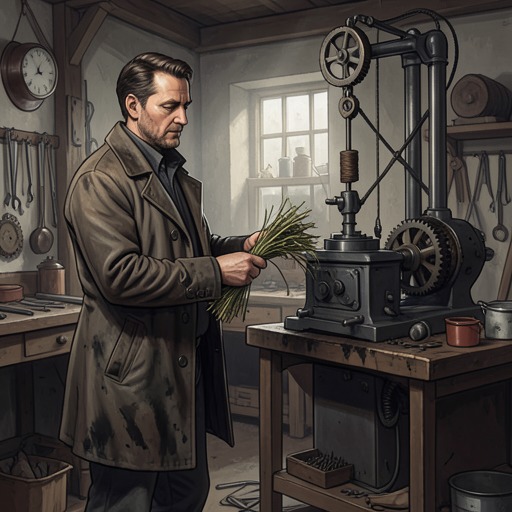
David experiments with plant fibers, including reeds, nettles, and thistles, seeking a cheap substitute for cotton rags. After months of trials, he finds a process that produces strong paper at a dramatically reduced cost, though perfecting the paste and its sizing remains difficult.
The discovery promises wealth not only for David’s family but for the paper trade. The Cointet brothers learn that his experiments may be valuable and become more determined to control the results.
Summer 1822
The Lawsuit Reaches the Séchards
The Cointets and Métivier pursue David through successive judgments, seizures, and appeals. Ève’s claim to the household furniture and Jérôme-Nicolas’s claim for unpaid rent create further legal disputes, while every stage adds costs to the original debt.
[Petit-Claud](entity:character-recall-character-petit-claud-b211818c7385) manipulates the proceedings to delay the final seizure, but he does so in the interests of the Cointets as much as in David’s. For the family, the law becomes a maze in which even temporary protection carries a price.
Summer 1822
Jérôme-Nicolas Refuses to Help
Ève appeals to [Jérôme-Nicolas Séchard](entity:character-recall-character-j-r-me-nicolas-s-ch-cb59a96e0196) for an endorsement that might help settle the debt, but the old printer refuses. He resents David’s independence and distrusts the possibility that his son’s scientific work can produce a fortune.
Even when he suspects that David’s discovery may be valuable, Jérôme-Nicolas will not risk his own money without control. His refusal leaves Ève and David dependent on the Cointets’ increasingly dangerous offers.
Late summer 1822
Kolb Hides David
As arrest for debt becomes imminent, [Kolb](entity:character-recall-character-kolb-6622c97540b7) learns that the Cointets and their agents are watching David. He helps David escape on horseback and arranges a secret refuge in a small room adjoining [Basine Clerget](entity:character-recall-character-basine-clerget-8af6b2085256)’s workplace.
Ève and her mother keep the hiding place secret while Kolb and [Marion](entity:character-recall-character-f0754c84f49d) protect David’s movements. David’s confinement buys time for his experiments but separates him from his family and leaves them exposed to the continuing legal pressure.
Late summer 1822
David Tests His Invention with His Father
David persuades Jérôme-Nicolas to let him use a secluded workroom at [Marsac](entity:location-recall-location-marsac-3b4e3a7356d1) to demonstrate his paper-making process. Working through the night with [Kolb](entity:character-recall-character-kolb-6622c97540b7), David produces strong and inexpensive sheets from plant fibers.
The old printer examines the samples but refuses to invest, suspecting that David may be trying to exploit him again. David leaves without support, while the Cointets continue to study the invention from the outside.
Autumn 1822
The Cointets Offer a Partnership
[Boniface Cointet](entity:character-recall-character-boniface-cointet-6e9f08285c52) offers David a partnership that will fund large-scale experiments, pay his debts, and provide him with money in exchange for a share of the profits. The offer is structured to let the Cointets control the patent and protect themselves if David fails to reproduce his results.
David accepts because he wants security for Ève and their child, and because the legal and financial pressures have exhausted him. He does not recognize how thoroughly the agreement weakens his control of the invention.
1822–1823
The Invention Becomes Commercial
With the Cointets’ equipment and capital, David makes further plant-fiber paper, including material suitable for printing newspapers. The brothers turn the discovery toward large-scale production and use their commercial network to secure buyers.
David’s original ambition was a fortune for his family, but the partnership allows the Cointets to dominate the practical exploitation. The paper trade changes, while the inventor’s share in the outcome remains limited by the agreement.
Late summer 1822
Lucien Returns to Angoulême
After leaving [Paris](entity:location-recall-location-paris-c02b439ce220) on foot, Lucien reaches the [Charente](entity:location-recall-location-charente-c52420f5a0a5) countryside exhausted and nearly penniless. A miller and his wife take him in, and he learns that David is in danger of imprisonment over the forged notes.
The news revives Lucien’s guilt and nearly overwhelms him. He asks a priest to find out whether his family will receive him, knowing that he has made their hardships worse.
Late summer 1822
Lucien Is Welcomed Home
Lucien arrives at the Séchard household and is embraced by Ève and [Madame Chardon](entity:character-recall-character-madame-chardon-efbeac636558), though their affection is now mixed with grief and distrust. His mother speaks plainly about the damage he has done and urges him to choose steady work.
Lucien promises to repair his mistakes, but his family no longer sees him as the certain future glory they once imagined. Their welcome offers refuge without restoring the old innocence of their relationships.
Early autumn 1822
Petit-Claud Stages Lucien’s Triumph
[Petit-Claud](entity:character-recall-character-petit-claud-b211818c7385) arranges newspaper praise, a serenade, and a banquet for Lucien, presenting the returned poet as an [Angoulême](entity:location-recall-location-angoul-me-c838a9088814) celebrity. The honor is carefully organized to serve local rivalries and to let Petit-Claud gain influence over the people surrounding David.
Lucien accepts the tribute as proof that his reputation can still be restored. Ève, however, suspects that the sudden change in public opinion has been engineered and warns him not to trust appearances.
Early autumn 1822
The Banquet Crowns Lucien
At the banquet, local officials and former schoolmates praise Lucien’s poetry and journalism. He gives a polished speech, enjoys the attention, and re-enters the role of a celebrated man rather than a defeated returnee.
The banquet strengthens Lucien’s confidence just as [Petit-Claud](entity:character-recall-character-petit-claud-b211818c7385) needs it to. Lucien reads the attention as recognition, while the lawyer uses the event to maneuver the family and the Cointets’ plans forward.
Autumn 1822
Louise Reappears as Prefect’s Wife
Louise returns to [Angoulême](entity:location-recall-location-angoul-me-c838a9088814) as the wife of [Sixte du Châtelet](entity:character-recall-character-sixte-du-ch-telet-d46512b0abe5), now a count and prefect. Lucien uses their former intimacy to persuade her to help David, believing that she still loves him and can secure political assistance.
Louise responds to his charm, while [Petit-Claud](entity:character-recall-character-petit-claud-b211818c7385) encourages Lucien’s confidence. The plan gives Lucien hope but also makes David’s fate depend on a relationship shaped by old injuries and present ambition.
Autumn 1822
A Forged Letter Lures David
[Cérizet](entity:character-recall-character-c-rizet-414f697e432f) alters one of Lucien’s letters to create the false impression that David can safely leave his hiding place and meet his brother. David believes the letter and sets out to see Lucien, hoping afterward to return to his family.
The forged letter is part of the Cointet brothers’ attempt to regain control of the inventor. David is intercepted and arrested for debt; Lucien’s name is once again linked to a betrayal he did not intend to cause.
Autumn 1822
Lucien Leaves Again
After learning that David has been arrested, Lucien believes that his family can no longer trust him. He writes a farewell letter, leaves his mother and sister without telling them, and sets out once more, resolved to end his life rather than continue as their source of harm.
His flight repeats the pattern of choosing escape when responsibility becomes unbearable. He carries his vanity and remorse into another uncertain journey.
Autumn 1822
Herrera Saves Lucien
On the road, Lucien encounters the Spanish priest [Carlos Herrera](entity:character-recall-character-carlos-herrera-0160f541aaa1), who draws him into conversation and persuades him to abandon his immediate suicide plan. Herrera offers money, protection, and a place in a new life, presenting himself as both spiritual adviser and political strategist.
He teaches Lucien a ruthless code of ambition: conceal weakness, treat people as instruments, and make public appearances serve private goals. Lucien accepts Herrera’s offer, leaving behind the possibility of reconciliation through honest work.
Autumn 1822
David Is Freed for a Deal
After David’s arrest, Ève hears that the Cointets will settle the debts and pay an additional sum if David partners with them and surrenders control of his invention. [Petit-Claud](entity:character-recall-character-petit-claud-b211818c7385) presents the arrangement as the only practical way to stop the litigation and protect the household.
David agrees in prison, wanting to spare Ève further hardship. The deal ends the immediate crisis but places the invention and its future production under the Cointets’ control.
Late 1822
The Cointets Buy David’s Rights
David demonstrates his paper in larger trials, but the Cointets direct him toward a difficult sizing process and control the manufacturing decisions. They use the uncertainty of scaling up his methods to argue that his promised results have not been fulfilled.
Eventually they settle with David for a limited payment and a share that leaves them free to exploit the most profitable uses. Their commercial success contrasts with David’s preference for peaceful family life over prolonged litigation and industrial ambition.
After the settlement
The Séchards Retire to La Verberie
David and Ève use the money they retain to establish a modest, secure life at [La Verberie](entity:location-recall-location-la-verberie-b23aff96bd21). David gives up the struggle to become a major industrial figure and turns instead to family, study, and collecting insects.
The settlement provides a future for Ève and their children but costs David the larger fortune he had hoped to create. His invention enters the paper industry through the Cointets, while he chooses domestic happiness over a further contest with capital.
After 1829
The Novel’s Final Return
The narrator looks forward to the later outcomes: the Cointets prosper, [Petit-Claud](entity:character-recall-character-petit-claud-b211818c7385) advances in the law, and [Cérizet](entity:character-recall-character-c-rizet-414f697e432f) seeks a new career in [Paris](entity:location-recall-location-paris-c02b439ce220). David and Ève live securely, though David has renounced the public glory and wealth that once seemed possible.
Lucien’s return to Paris is left for another part of his story. His survival under Herrera’s influence closes this portion of the novel not with reconciliation, but with the promise of further choices and consequences.